The short answer: for most visitors the Osterfjord / Mostraumen is the easiest fjord to visit, it departs from Bergen's Fish Market, takes 3.5 hours and runs all year. If you want UNESCO-listed scenery in a full day, the Nærøyfjord is the standout. And the Hardangerfjord is the relaxed, pastoral alternative that's closest to Bergen by road. Geirangerfjord, despite the Instagram ubiquity, is not a realistic day trip from Bergen, read the caveat section before you buy a ticket.
TL;DR, which fjord for which traveller
- Short on time or want the easiest day out: Osterfjord / Mostraumen, half a day from the Fish Market, from NOK 890, year-round.
- Want the most dramatic UNESCO scenery with a full day: Nærøyfjord, 10–12 hours round trip by train, bus and electric cruise, from about NOK 1,595.
- Want something scenic but less rushed: Hardangerfjord, 1.5–3 hours from Bergen, gentler cliffs, orchards and waterfalls, not bound by UNESCO vessel restrictions.
- Have multiple days and want to go deeper: Aurlandsfjord / Sognefjord, pair with the Flåm Railway and overnight in Flåm or Balestrand.
- Geirangerfjord: spectacular, but budget at least two days from Bergen, it's 6.5–8 hours each way by road.
Osterfjord & Mostraumen, the closest fjord to Bergen
The Osterfjord begins almost at Bergen's doorstep and is the one fjord you can visit without any overland transfer. The selling point is the Mostraumen tidal strait, a 600-metre channel barely 50 metres wide, where the cruise boat threads between green cliffs and noses right up to a waterfall, close enough to feel the spray. The round trip covers about 27 km up the Osterfjord to Modalen (Norway's second-smallest municipality, population roughly 380) and back in 3–3.5 hours.
Rødne Fjord Cruise is the original and longest-running operator, departing from Zachariasbryggen by the Fish Market in central Bergen almost every day of the year. Modern catamarans with heated indoor lounges and outdoor viewing decks; an onboard kiosk for coffee, waffles and snacks. Watch for sea eagles, seals on the rocks, and goats clinging to hillsides. Adult fares run from NOK 890 (children 4–15 half price, under 4 free); a 20% Bergen Card discount applies.
Assessment: it's not the most dramatic fjord in Norway — the cliffs are modest by Nærøyfjord standards and there are no UNESCO accolades — but it's the single most convenient fjord experience in Scandinavia. If you're in Bergen for one night, it's the right call.
Hardangerfjord, the Queen of the Fjords
Norway's second-longest fjord at 179 km, the Hardangerfjord is a completely different character from the vertical drama of the Nærøyfjord: gentler, pastoral, lined with fruit orchards and cider farms rather than sheer 1,700-metre cliffs. The main draw changes with the season, May brings the famous blossom (apple, cherry, plum and pear), summer brings walkers heading for Trolltunga and Vøringsfossen, and autumn turns the valleys amber. The Hardanger Bridge, a 1,380-metre suspension bridge spanning the fjord, is impressive year-round.
Norheimsund — the most accessible gateway — is only about 80 km and 1.5 hours from Bergen by bus or car. Rødne's Hardangerfjord Express to Rosendal departs from Bergen's Strandkaiterminalen and takes about two hours each way, giving you 3.5 hours in the village ashore — time enough for the 17th-century Baroniet Rosendal castle, a waterfall walk and a cider stop. Fares from NOK 838 round trip. Alternatively, the Hardangerfjord in a Nutshell package combines train, bus and boat to reach Vøringsfossen waterfall (plunging 182 m) from about NOK 1,991.
Unlike the Nærøyfjord and Geirangerfjord, Hardangerfjord is not a UNESCO World Heritage Site, which means it is not subject to the 2026 zero-emission vessel rules and a wider range of operators can enter. That translates to more departure options, lower base fares and less booking pressure in peak season.
Nærøyfjord — the UNESCO showstopper
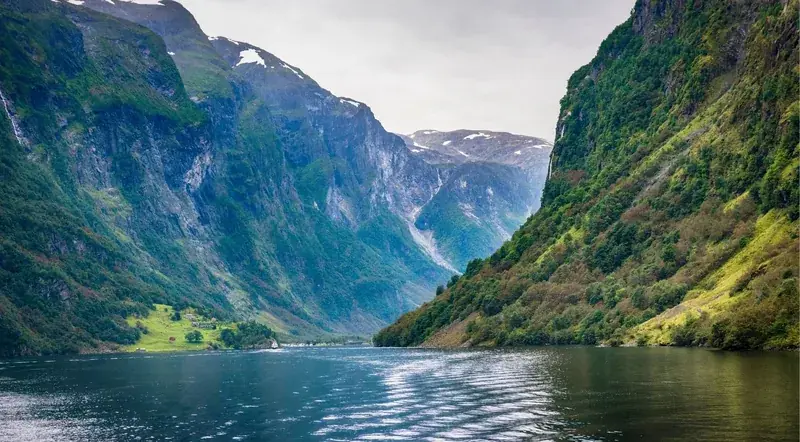
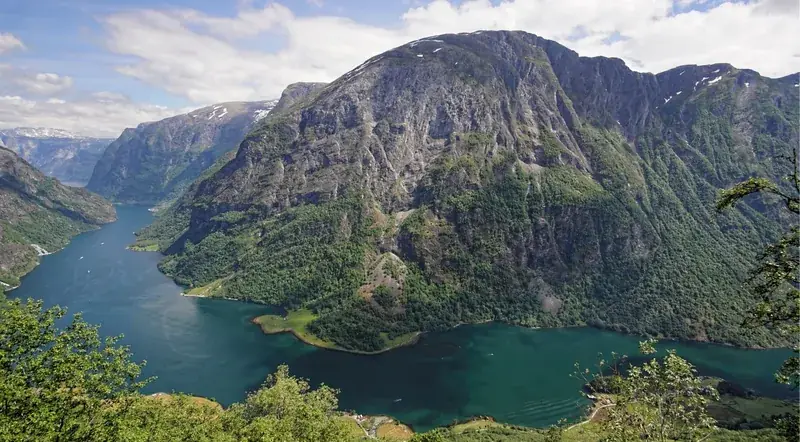
If the Osterfjord is convenient and Hardangerfjord is pastoral, the Nærøyfjord is cinematic. A UNESCO World Heritage Site since 2005, it's one of the narrowest fjords in the world — pinching to about 250 metres wide at Beitelen, with vertical cliffs rising up to 1,761 metres on either side. Cascading waterfalls, tiny abandoned fjord farms clinging to impossible ledges, and occasional seal colonies make the 18-km cruise between Flåm and Gudvangen feel like sailing through a Tolkien landscape.
The catch is logistics. You can't sail directly from Bergen to the Nærøyfjord; the fjord cruise is the final segment of a longer day. The standard approach is the Norway in a Nutshell loop — Bergen Railway to Voss, bus to Gudvangen, electric catamaran to Flåm, and the Flåm Railway back — which takes 10–12 hours round trip and costs from about NOK 1,595. Guided day tours from Bergen bundle the cruise with Stegastein viewpoint and run around 11 hours and NOK 2,950. It's a long day, but if this is the only fjord you ever see, you'll understand why Norway sells itself on them.
From 1 January 2026, all passenger vessels under 10,000 GT must be zero-emission inside the UNESCO fjords, including the Nærøyfjord. Tourist cruises already comply — The Fjords DA operates the Flåm–Gudvangen run on fully electric catamarans. In practice, the scenery gets even quieter: no diesel rumble, just the sound of water and oars.
Aurlandsfjord & the Flåm Railway — the fjord with a railway bonus
The Aurlandsfjord is a 29-km branch of the Sognefjord, with Flåm village sitting at its innermost end. It adjoins the UNESCO-listed Nærøyfjord — the two are usually experienced together on the Norway in a Nutshell loop. What makes Aurlandsfjord distinct is what you get ashore: the Flåm Railway (Flåmsbana), one of the world's steepest standard-gauge lines, descending 866 m through 20 tunnels and past the 93-metre Kjosfossen waterfall, all in about an hour. Add the Stegastein viewpoint — a 30-metre glass-and-steel platform cantilevered 650 m above the fjord — and you have a full day of scenes that rarely feel real.
Unlike the Nærøyfjord, the Aurlandsfjord itself is not a UNESCO inscription (the Nærøyfjord branch holds that status), though the Aurlandsfjord is included in the zero-emission zone from 2026. Electric cruises already operate here. Practical note: the Norway in a Nutshell day from Bergen departing around 08:00 returns around 19:00–21:00 depending on the season, making it a full but feasible same-day return. Overnight in Flåm or Aurland adds real value for hiking (Aurlandsdalen valley) and a quieter fjord morning before the day-trippers arrive.
Best guided option for this area: the Bergen → Nærøyfjord + Flåm + Stegastein day tour handles all the logistics — bus, electric fjord cruise, the Stegastein viewpoint 650 m above Aurland, and time in Flåm — returning the same evening. No train timetables to juggle.
Free cancellation on most dates · booked on GetYourGuide
Other Experiences You Might Enjoy
While you're in the fjord region, look at what pairs well with your chosen fjord. The Flåm Railway is a natural companion to a Nærøyfjord or Aurlandsfjord day — one of the world's steepest rail lines, dropping 866 m through tunnels and past waterfalls. The Sognefjord Fjærland glacier day trip combines a fjord cruise with the Jostedalsbreen glacier arm, the Glacier Museum and a stave church. For something shorter from Bergen itself, the Mount Fløyen funicular and Bryggen wharf need less than half a day each.
Sognefjord — if you have more than a day
Norway's longest fjord (204 km) and deepest (1,308 m), the Sognefjord is the "King of the Fjords", and the one that genuinely rewards slowing down. The standard day-trip access from Bergen is through its arms (the Nærøyfjord and Aurlandsfjord branches), but the Norled express boat from Bergen runs along the main Sognefjord in summer all the way to Flåm in 5h 40m southbound, with stops at villages including Balestrand, a pretty 19th-century resort town. The adult fare is NOK 1,295 one way, NOK 2,590 return, and there is one sailing a day, April to October only. The inner fjord's Fjærland branch adds a day at the Jostedalsbreen glacier arm, the Glacier Museum and Hopperstad stave church. This is best done as a long guided day tour from Bergen.
One caveat: the Sognefjord main stretch is wide and open, less visually intense than the narrow Nærøyfjord or Geirangerfjord. Its appeal is depth and variety rather than one knockout moment. If you can give it two or three days — base in Balestrand, hike, cycle, take a local ferry to Fjærland — it becomes a far better trip. As a single rushed day trip, the Nærøyfjord delivers more concentrated scenery per hour.
Geirangerfjord — spectacular, but not a Bergen day trip
Geirangerfjord is one of the world's most photographed fjords — a 15-km arm flanked by the Seven Sisters waterfall and abandoned mountain farms clinging to the cliffs at Skageflå and Knivsflå. It is also a UNESCO World Heritage Site (inscribed alongside the Nærøyfjord in 2005). And it is, frankly, not a day trip from Bergen. The drive from Bergen is 6.5–8 hours each way depending on the ferry route. Flying Bergen–Ålesund (60–90 minutes) then transferring to Geiranger takes around 4–5 hours each way. A same-day return is essentially impossible without sacrificing the actual fjord.
The right way to visit Geiranger is to base yourself there or in Ålesund for one to two nights, or to include it as a stop on a multi-day fjord cruise. From 2026, Geiranger also caps cruise ships at five per day and 8,000 passengers per day, and zero-emission rules apply to vessels under 10,000 GT inside the fjord. Local silent electric sightseeing cruises comply; large ocean ships over 10,000 GT have until 2032. Book the on-fjord silent cruise in advance in July and August. See our full comparison at best fjord cruise from Bergen: Mostraumen, Nærøyfjord & Hardangerfjord compared.
2026 update: zero-emission zones and what actually changes
From 1 January 2026, Norway mandates zero-emission vessels (battery-electric or hydrogen) for all passenger ships under 10,000 gross tonnes operating inside the UNESCO World Heritage fjords: Nærøyfjord, Aurlandsfjord, Geirangerfjord, Sunnylvsfjord and Tafjord. Tourist day cruises on these routes already run compliant electric catamarans — The Fjords DA's "Future of the Fjords" vessels have been electric since 2019. Large ocean cruise ships over 10,000 GT have an extension until 2032.
For independent travellers, the practical effects are: quieter, smoother cruises on the UNESCO fjords; no significant itinerary changes for day trips from Bergen; and a slight increase in booking pressure on the UNESCO routes since fewer non-compliant vessels can operate. On the Hardangerfjord and Osterfjord, which are not in the zero-emission zone, nothing changes operationally. Norway's new tourist accommodation tax (up to 3%, adopted by opt-in municipalities from mid-2026) is unlikely to affect same-day fjord visitors who aren't staying overnight.
Quick comparison: which fjord for which traveller
| Fjord | Travel time from Bergen | Day trip? | UNESCO | Best for |
|---|---|---|---|---|
| Osterfjord / Mostraumen | ● 0 min transfer Cruise departs Bergen Fish Market | ◯ Half-day (3.5 h) | — | |
| Hardangerfjord | ● 1.5–3 h By bus or car to gateway | ✓ Yes (9–11 h) | — | |
| Nærøyfjord | ● 2.5–3 h To Flåm / Gudvangen by train+bus | ✓ Yes (10–12 h) | ★ UNESCO | |
| Aurlandsfjord | ● 2.5–3 h Same loop as Nærøyfjord | ✓ Yes (10–13 h) | ≈ adjoins | |
| Sognefjord | ● 5.5 h one-way Express boat from Bergen | △ Marginal — overnight best | — (arms are) | |
| Geirangerfjord | ● 6.5–8 h by road Or 4–5 h fly + transfer | ✗ Not a day trip | ★ UNESCO |
A note on prices. All fares quoted are indicative — confirm live before booking, as seasonal pricing applies. Our cheap fjord cruises guide covers deals, Bergen Card discounts and the cheapest DIY options for each route.